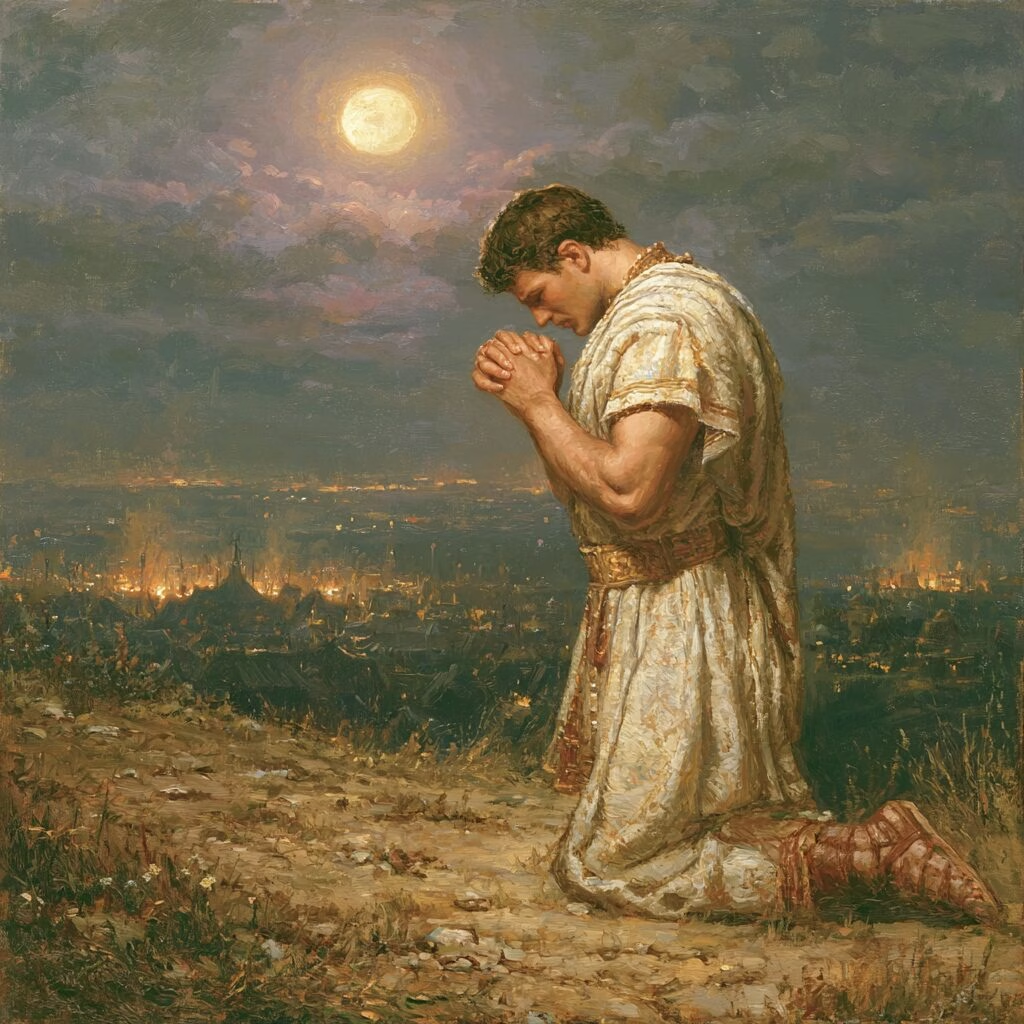
The story of Gideon is not merely about military victory. It is about God transforming fear into faith, tearing down idolatry, and demonstrating that divine power is perfected through human weakness. Gideon began hiding in a winepress and ended leading Israel to freedom with only three hundred men. Yet his story also warns that even victorious believers must guard their hearts from pride, compromise, and misplaced worship.
The story of Gideon reveals this enduring truth: God does not call the qualified; He qualifies the called.
Why Does the Story of Gideon Still Matter?
The story of Gideon is one of the most compelling narratives in the Book of Judges. It contains fear, warfare, miracles, worship, weakness, courage, and tragic warning, all woven together with remarkable honesty. Scripture, unlike fashionable society, has never felt the need to flatter its heroes.
Many believers love Gideon because he feels familiar. He does not begin as a fearless warrior. He begins anxious, uncertain, and overwhelmed by circumstances. He hides from the enemy while trying merely to survive another day.
Yet God calls this frightened man a “mighty man of valour.”
That single sentence reveals something extraordinary about the nature of God. The Lord speaks not merely according to what we are presently experiencing, but according to His redemptive purpose and calling over our lives.
Therefore, the story of Gideon becomes deeply personal for every believer. It speaks to anyone who has ever felt:
- Inadequate
- Intimidated
- Spiritually weak
- Forgotten
- Unqualified for God’s purposes
In the story of Gideon, we discover that God often chooses unlikely people so His power becomes unmistakably divine. Heaven has never depended upon impressive statistics. The Lord remains gloriously unconcerned with human limitations, which is fortunate for most of us.
What Is the Spiritual Context of the Story of Gideon?
The story of Gideon occurs during one of the darkest periods in Israel’s history. The repeated pattern in the Book of Judges is painfully familiar.
The Pattern of Israel Revealed in Judges and the Result
| Pattern Of Israel In Judges | Result |
|---|---|
| Israel abandons God | Idolatry and moral decline |
| God allows oppression | Foreign nations dominate them |
| Israel cries out | God raises a deliverer |
| Deliverance comes | Temporary peace follows |
| The cycle repeats | Spiritual decline resumes |
This cycle appears throughout the Book of Judges. It reveals something sobering about the human heart: People often seek God most earnestly when they can no longer manage life without Him.
Humanity possesses an astonishing ability to forget God during seasons of comfort. One is reminded of the gentleman who ignores the lifeboat drill until the ship begins making unfamiliar noises beneath the carpet.
How Did Midian Oppress Israel?
The story of Gideon begins with Israel suffering devastating oppression under Midian.
“Then the children of Israel did evil in the sight of the LORD. So the LORD delivered them into the hand of Midian for seven years, and the hand of Midian prevailed against Israel…Then Israel was greatly impoverished because of the Midianites, and the children of Israel cried out to the LORD.” Judges 6:1~6
The Midianites invaded Israel during harvest season like swarms of locusts. They stole crops, destroyed livestock, and stripped the land bare.
Israel became:
- Impoverished
- Isolated
- Intimidated
- Spiritually broken
Yet before God addressed the military problem, He addressed the spiritual one. This is profoundly important. God understood that Midian was not Israel’s deepest issue. Idolatry was.
The Two Greatest Problems of Israel
| External Problem | Internal Problem |
|---|---|
| Midianite oppression | Idolatry and compromise |
| Fear and poverty | Spiritual rebellion |
| Enemy invasion | Abandoning covenant with God |
| Military weakness | Worshipping false gods |
External bondage often reveals internal compromise. In the story of Gideon, the enemy outside Israel exposes the rebellion inside Israel.
Why Did God Call Gideon a Mighty Man of Valour?
The story of Gideon is remarkable because God calls Gideon according to divine purpose, not present appearance.
Gideon’s introduction is intentionally ironic:
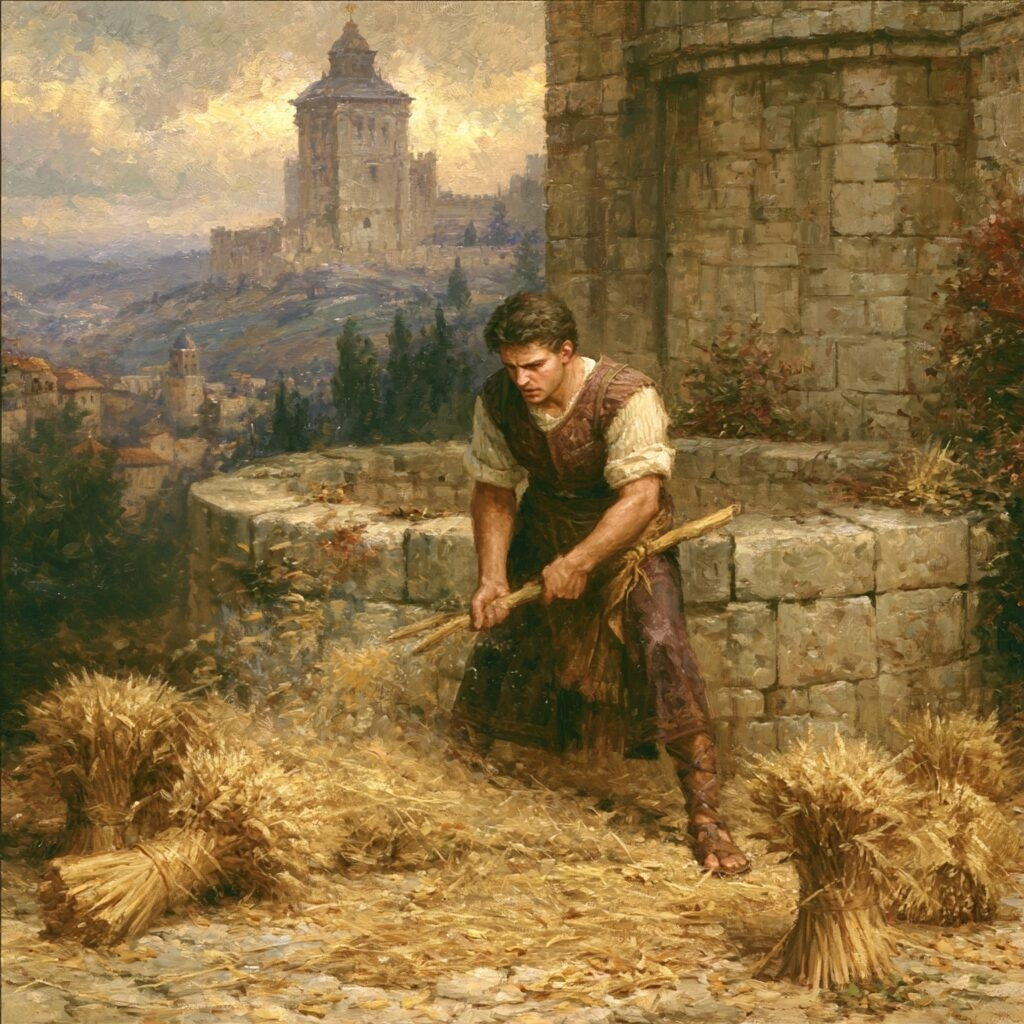
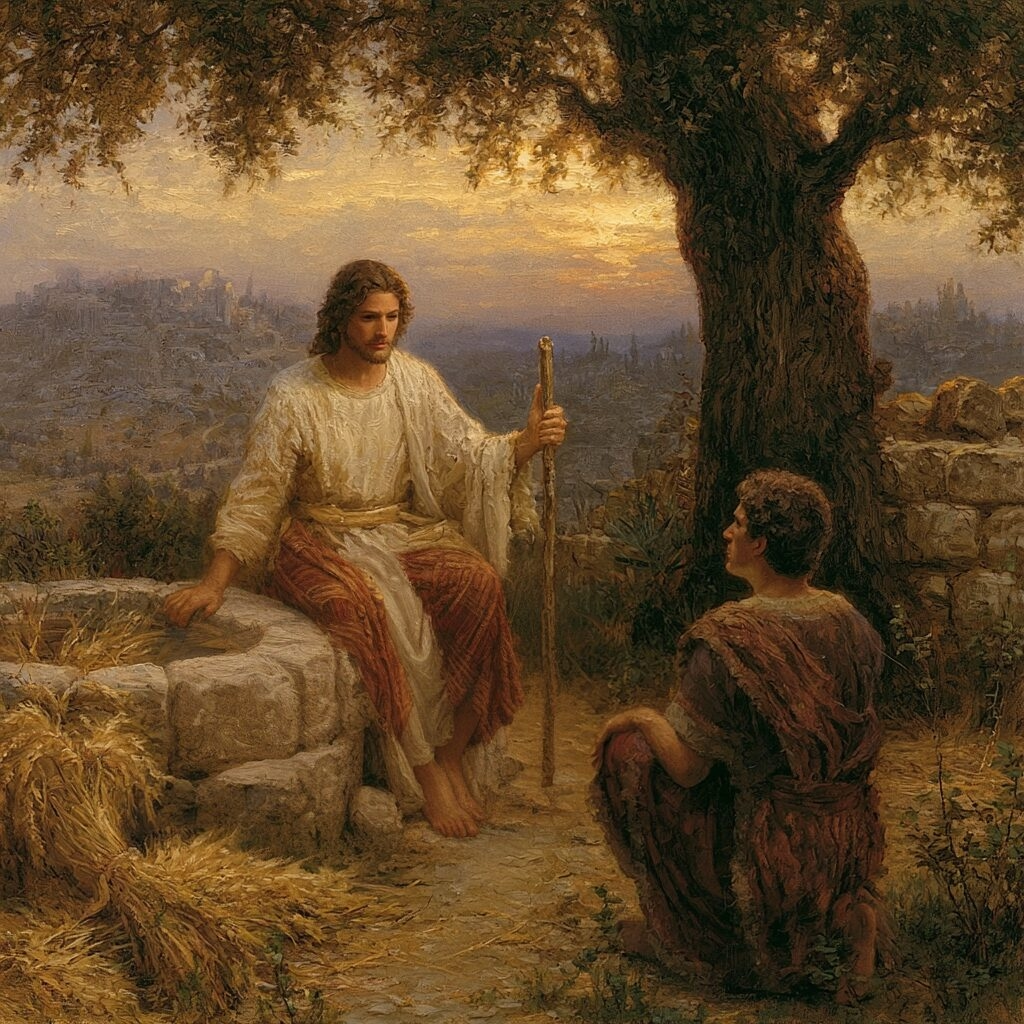
“Now the Angel of the Lord came and sat under the terebinth tree, which was in Ophrah, which belonged to Joash the Abiezrite, while his son Gideon threshed wheat in the winepress, in order to hide it from the Midianites.” Judges 6:11
A winepress was designed for crushing grapes, not threshing grain. Gideon is hiding because fear dominates the nation. This is not exactly the entrance of a conquering hero. His attempt at subversive agriculture is motivated by his quest for survival.
Then comes one of the most astonishing greetings in Scripture:
“And the Angel of the Lord appeared to him, and said to him, “The Lord is with you, you mighty man of valour!” Judges 6:12
The Hebrew phrase gibbor he chayil refers to:
- Mighty warrior,
- Valiant champion,
- Courageous hero.
Gideon saw weakness. God saw destiny.
This reveals a foundational spiritual principle:
God speaks according to His calling, not merely according to our current condition.
Why Does God Call Weak People?
The story of Gideon belongs to a much wider biblical pattern: God calls weak people so His strength becomes unmistakable.
Human Limitation Compared With the Calling of God
| Biblical Figure | Human Limitation | God’s Calling |
|---|---|---|
| Moses | Slow of speech | Deliverer of Israel |
| Jeremiah | Too young | Prophet to nations |
| Peter | Fearful and impulsive | Leader of the Church |
| Paul | Weakness and suffering | Apostle to the Gentiles |
| Gideon | Fearful and hiding | Mighty warrior |
The Lord consistently works this way throughout Scripture.
“But God has chosen the foolish things of the world to put to shame the wise, and God has chosen the weak things of the world to put to shame the things which are mighty.” 1 Corinthians 1:27
The kingdom of God does not operate upon natural qualification. It operates upon surrendered availability.
This is one reason the story of Gideon has encouraged believers for generations. It quietly dismantles the dreadful idea that God is waiting only for impressive people. He is not running a celestial talent agency.
Was Gideon Wrong to Question God?
The story of Gideon shows that Gideon’s questions were not arrogant rebellion so much as wounded confusion.
Gideon responds honestly:
“O my lord, if the LORD is with us, why then has all this happened to us?” Judges 6:13
Gideon knew the stories:
- The Exodus
- The Red Sea
- The miracles of old
But his present reality appeared incompatible with God’s promises.
Many believers quietly wrestle with the same tension:
- “If God loves me, why this struggle?”
- “If God is faithful, why this delay?”
- “If God is near, why does everything feel so difficult?”
Scripture does not conceal the struggles of sincere believers. Gideon’s questions are preserved because God is not threatened by honest wrestling.
“Then the Lord turned to him and said, “Go in this might of yours, and you shall save Israel from the hand of the Midianites. Have I not sent you? . . . And the Lord said to him, “Surely I will be with you, and you shall defeat the Midianites as one man.” Judges 6:16
Yet God does not give Gideon a detailed explanation. Instead, He gives him an assignment. This is often God’s pattern.
The Human Response Compared with how God Responds
| Human Response | God’s Response |
|---|---|
| “Why is this happening?” | “Go in this might of yours.” |
| Desire for explanation | Call to obedience |
| Focus on weakness | Focus on God’s presence |
| Fear of failure | Promise of divine help |
When e seek explanations, God frequently offers the choice to obey.
Faith grows not merely through understanding everything, but through trusting God when understanding remains incomplete. In the story of Gideon, God does not answer every question before calling Gideon forward.
Why Did Gideon First Have to Destroy the Altar of Baal?
The story of Gideon teaches that private compromise must be confronted before public victory can come.
One of the most profound moments in Gideon’s story occurs before the military campaign even begins.
God commands Gideon:
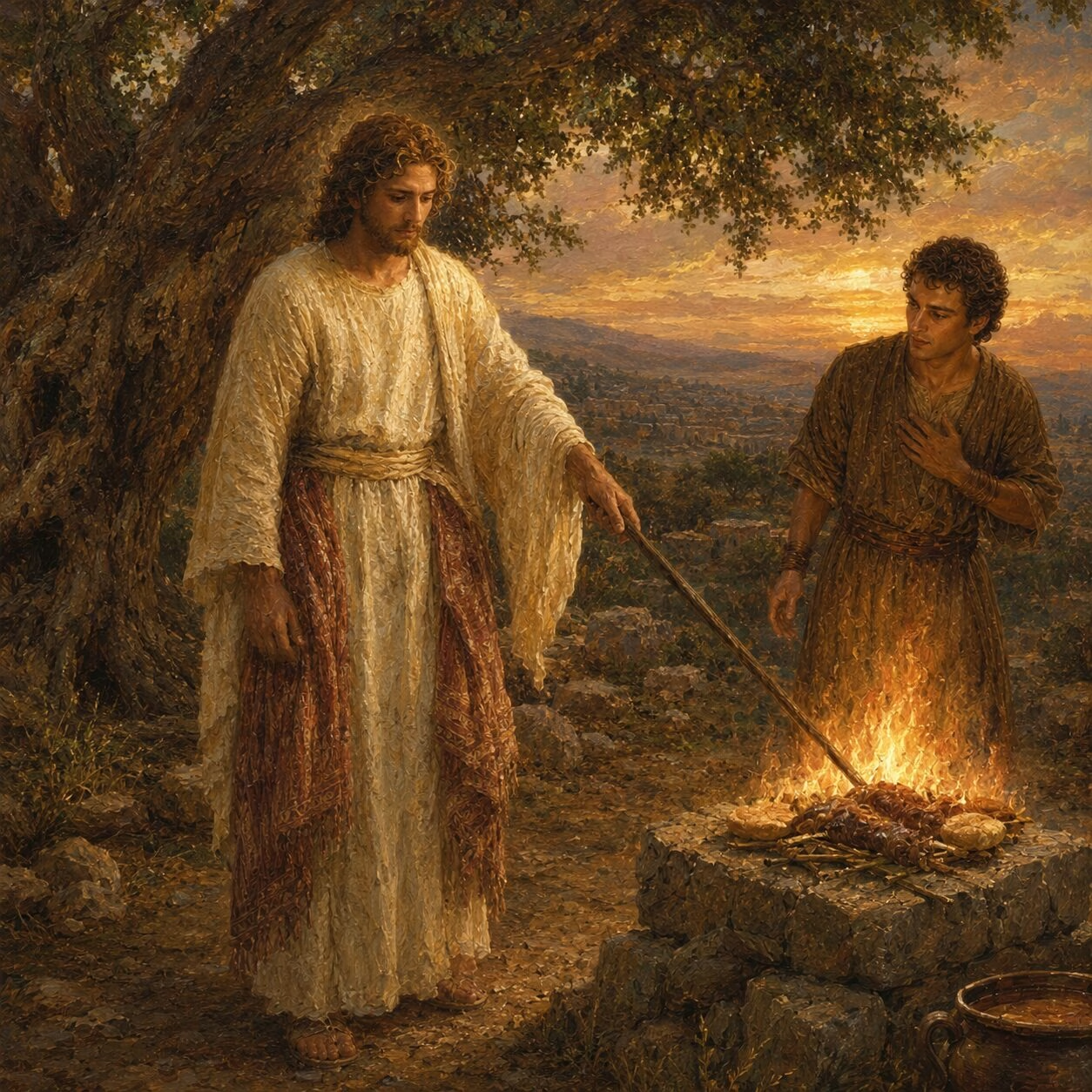
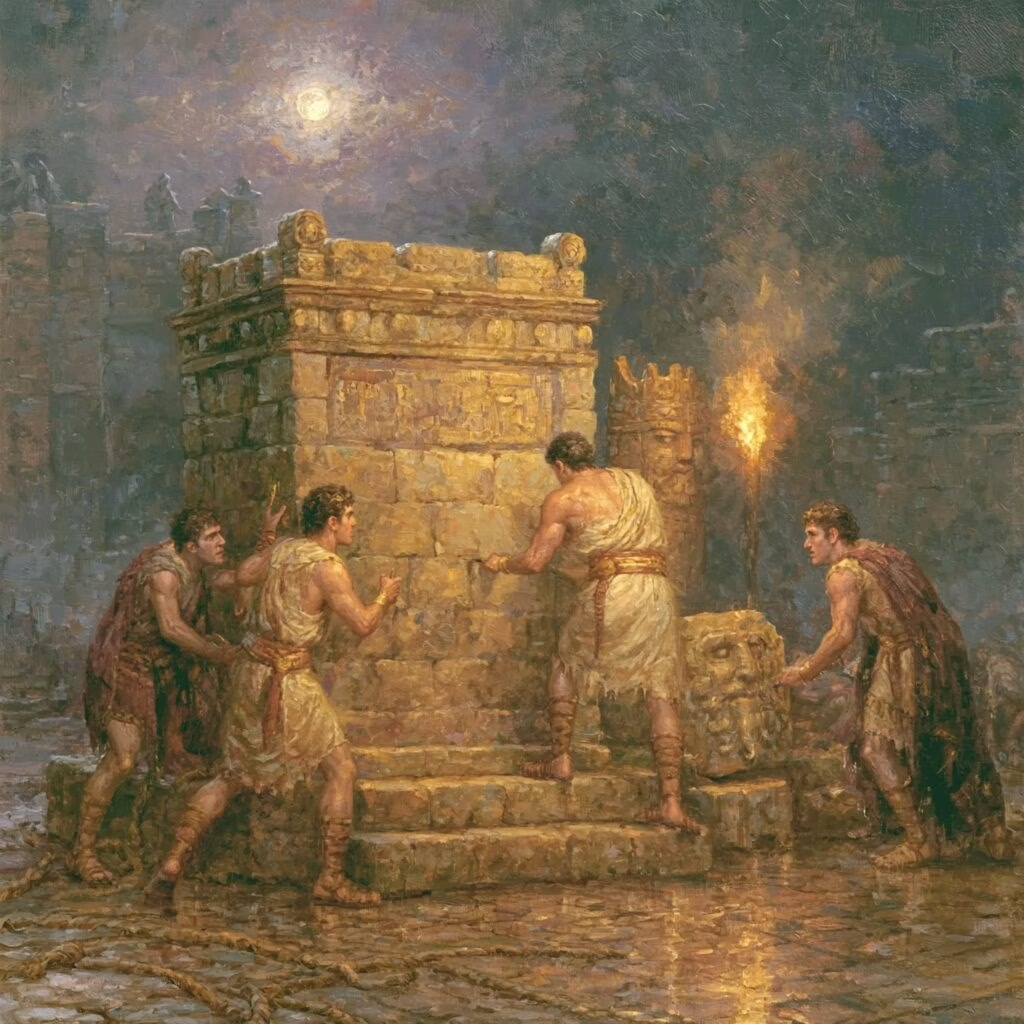
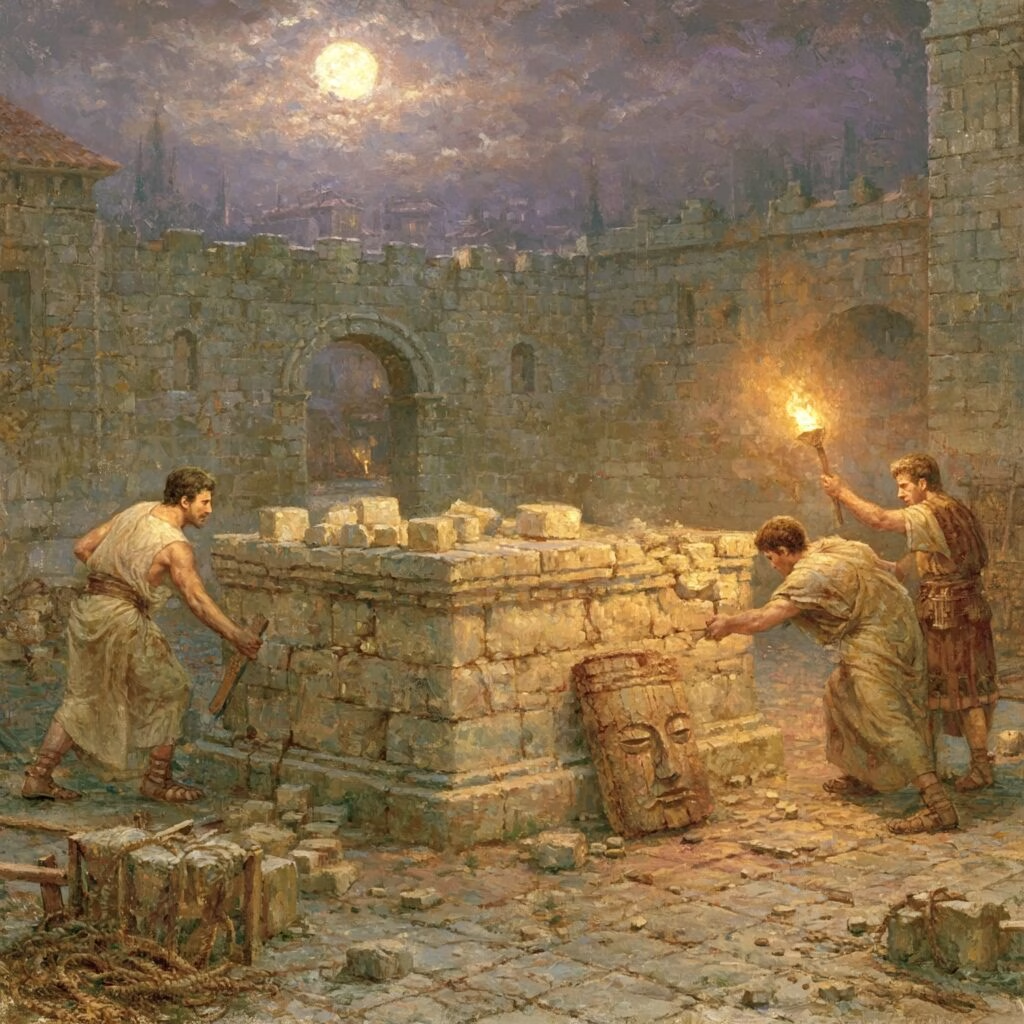
“Tear down the altar of Baal that your father has, and cut down the wooden image that is beside it.” Judges 6:25
This is enormously significant. Israel’s greatest enemy was not Midian first.
It was idolatry. Before public victory could come, private compromise had to be confronted.
Revival Begins at Home
The altar belonged to Gideon’s own father. Judgment began inside his household before touching the nation. True spiritual awakening always begins personally before it becomes public.
Many people desire national revival while quietly protecting private idols. This is rather like requesting a clean house while refusing to open the cupboard where everything has been shoved.
God addresses the hidden altar first.
Courage Often Begins in Secret
“But because he feared his father’s household and the men of the city too much to do it by day, he did it by night.” Judges 6:27
Gideon obeyed while still afraid. This is deeply encouraging. Many believers mistakenly imagine that courage means feeling no fear. Scripture repeatedly shows the opposite.
What Courage Really Looks Like
A Comparison of Natural Human Courage and Biblical Courage
| False Idea of Courage | Biblical Courage |
|---|---|
| Feeling fearless | Obeying despite fear |
| Complete confidence | Trusting God gradually |
| Emotional certainty | Acting on God’s Word |
| Never trembling | Continuing forward anyway |
Faith is not emotional certainty.
Faith is acting upon God’s Word despite trembling feelings.
Perfect confidence rarely arrives before obedience begins. It is usually fashionably late.
False Gods Cannot Defend Themselves
The response of Joash, the father of Gideon remains wonderfully sharp.
“But Joash replied to the hostile crowd around him, Are you going to plead Baal’s cause? Are you trying to save him? Whoever fights for him shall be put to death by morning! If Baal really is a god, he can defend himself when someone breaks down his altar.’ If he is a god, let him plead for himself.” Judges 6:31
Indeed. A deity requiring emergency assistance from nervous villagers armed with ropes and indignation is not having a particularly triumphant afternoon.
False gods always demand protection from people.
The true God protects His people.
This moment in the story of Gideon exposes the absurdity of idolatry with marvellous clarity.
What is the Meaning of Gideon’s Fleece Test?
The story of Gideon shows the fleece as evidence of Gideon’s insecurity and God’s patience, not as the highest model for mature Christian guidance.
The fleece account remains one of the most misunderstood passages in Scripture.
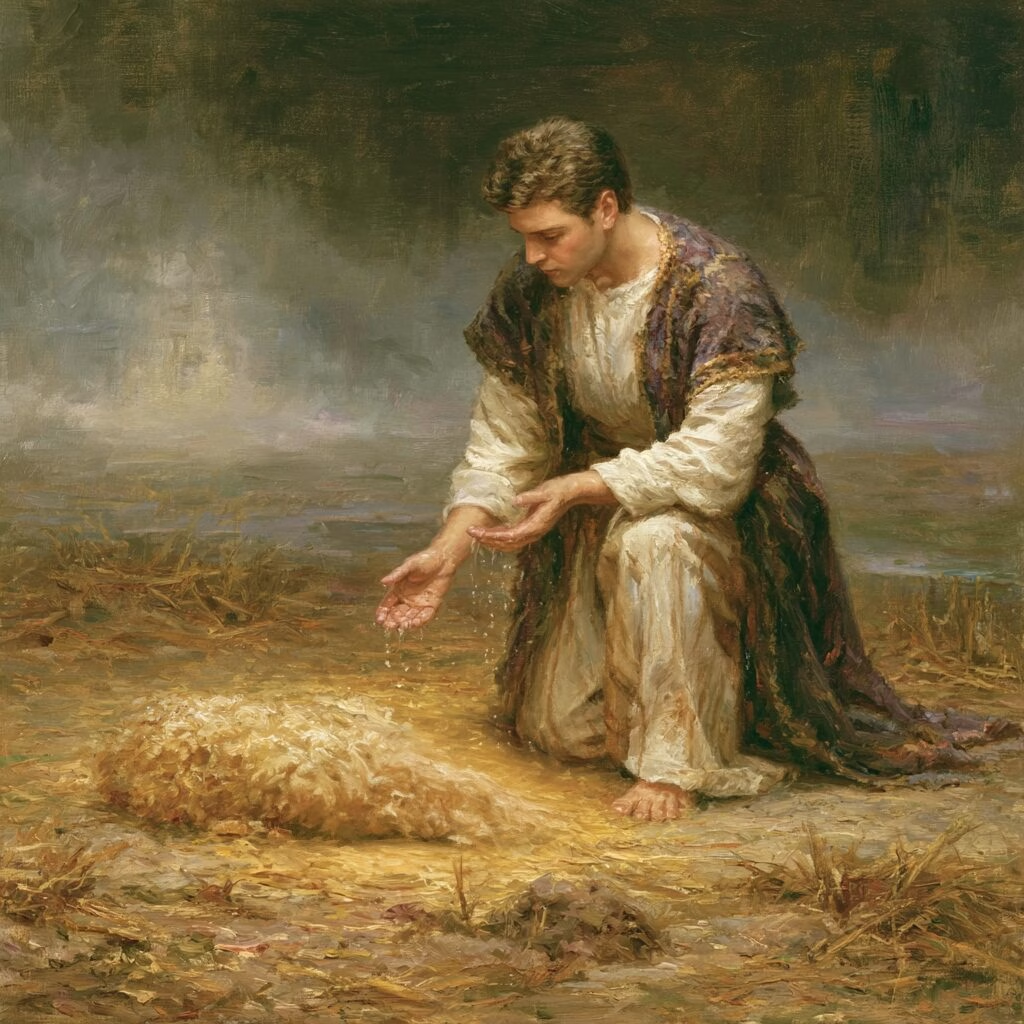
Gideon asks God for two signs:
- Dew upon the fleece only.
- Dew upon the ground only.
“ Gideon said to God, ‘If you will save Israel by my hand as you have promised look, I will place a wool fleece on the threshing-floor. If there is dew only on the fleece and all the ground is dry, then I will know that you will save Israel by my hand, as you said.’ And that is what happened. Gideon rose early the next day; he squeezed the fleece and wrung out the dew – a bowlful of water.” Judges 6:36~38
Many Christians use this story as a model for making decisions. Yet the narrative presents it more as evidence of Gideon’s insecurity than exemplary mature faith. God graciously accommodates Gideon’s weakness, but the broader story reveals Gideon struggling to trust what God has already clearly spoken.
Mature Guidance Under the New Covenant
Immature Dependence Compared with Mature Spiritual Guidance
| Immature Dependence | Mature Spiritual Guidance |
|---|---|
| Constant external signs | Scripture |
| Endless confirmations | Leading of the Holy Spirit |
| Fear-driven hesitation | Wisdom and discernment |
| Emotional instability | Inward peace |
“For as many as are led by the Spirit of God, these are sons of God.” Romans 8:14
Still, Gideon’s fleece reveals something deeply comforting:
God is patient with growing faith.
The Lord does not discard sincere believers because they are still learning to trust Him. In the story of Gideon, weakness is not applauded. It is met with mercy.
Why Did God Reduce the Army of Gideon Army to 300?
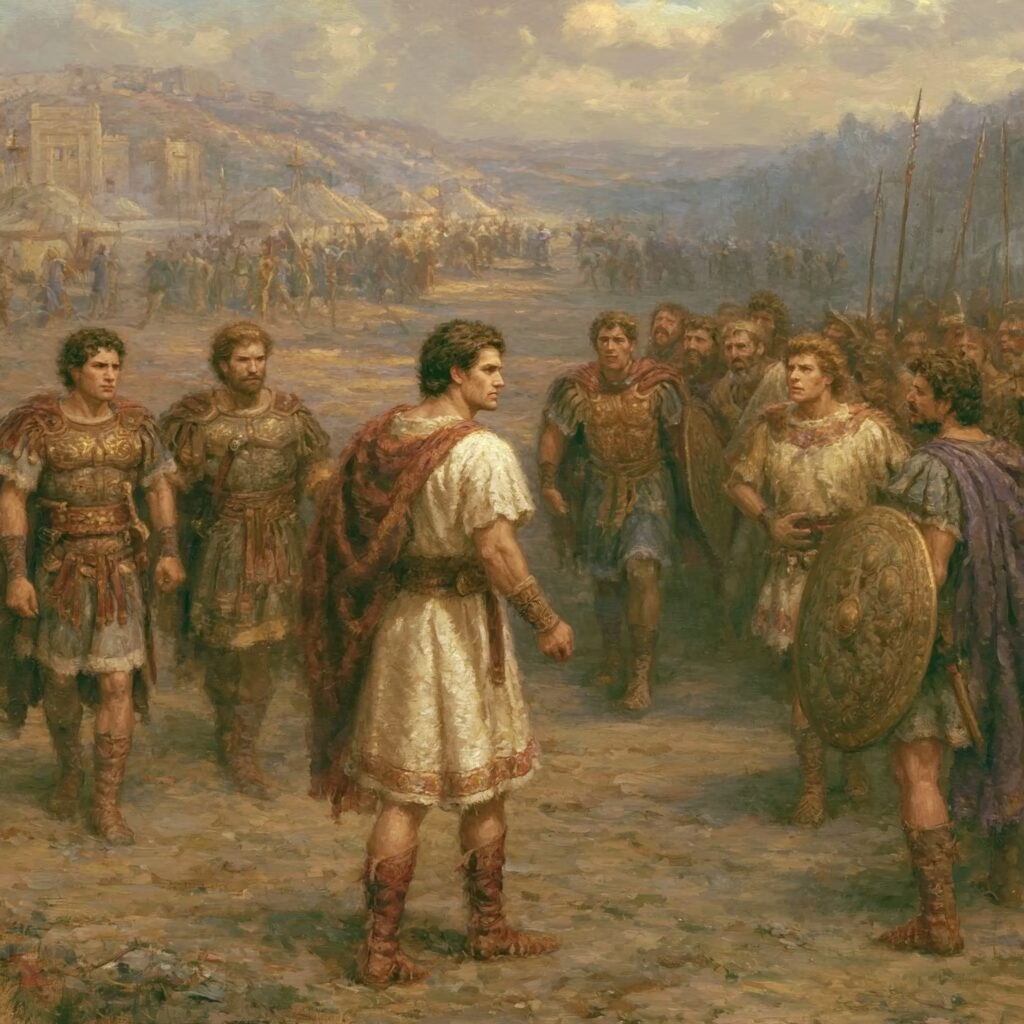
The story of Gideon shows that God reduced the army to three hundred men so Israel would know the victory came from divine power, not military strength.
Gideon gathered thirty two thousand men against an enemy force of approximately one hundred and thirty five thousand. Even at full strength, Israel was badly outnumbered. Yet God said:
“The people who are with you are too many for Me to give the Midianites into their hands, lest Israel claim glory for itself against Me.” Judges 7:2
This is one of the great paradoxes of Scripture. God deliberately reduced human strength so divine power would become unmistakable.
Reduction of Gideon’s Army
The Original Army Compared with the Remaining Number
| Stage | Number Remaining | Reason |
|---|---|---|
| Initial army | 32,000 | Gathered for battle |
| Fearful men dismissed | 10,000 | 22,000 departed |
| Final selection | 300 | Dependence upon God |
The spiritual principle is profound:
God sometimes subtracts human resources in order to increase spiritual dependence.
Throughout Scripture:
- Moses faced the Red Sea trapped.
- Jehoshaphat won through worship.
- David confronted Goliath with a sling.
- The disciples fed thousands with a few loaves.
- Christ conquered death through apparent weakness upon a cross.
Biblical Pattern of Divine Weakness
Human Limitations Compared with Divine Enablement
| Situation | Human Limitation | Divine Outcome |
|---|---|---|
| Red Sea | No escape | Miraculous deliverance |
| Jericho | Impossible walls | Supernatural victory |
| David vs Goliath | Small shepherd boy | Giant defeated |
| Gideon’s 300 | Vastly outnumbered | Enemy routed |
| The Cross | Apparent defeat | Resurrection victory |
God’s methods frequently offend human pride.
He will often allow situations where natural ability becomes insufficient so believers learn dependence upon His Spirit.
This is why the story of Gideon remains so powerful. It reminds us that God is not embarrassed by small numbers, weak vessels, or unlikely instruments.
What Do the Trumpets, Torches, and Clay Jars Symbolise?
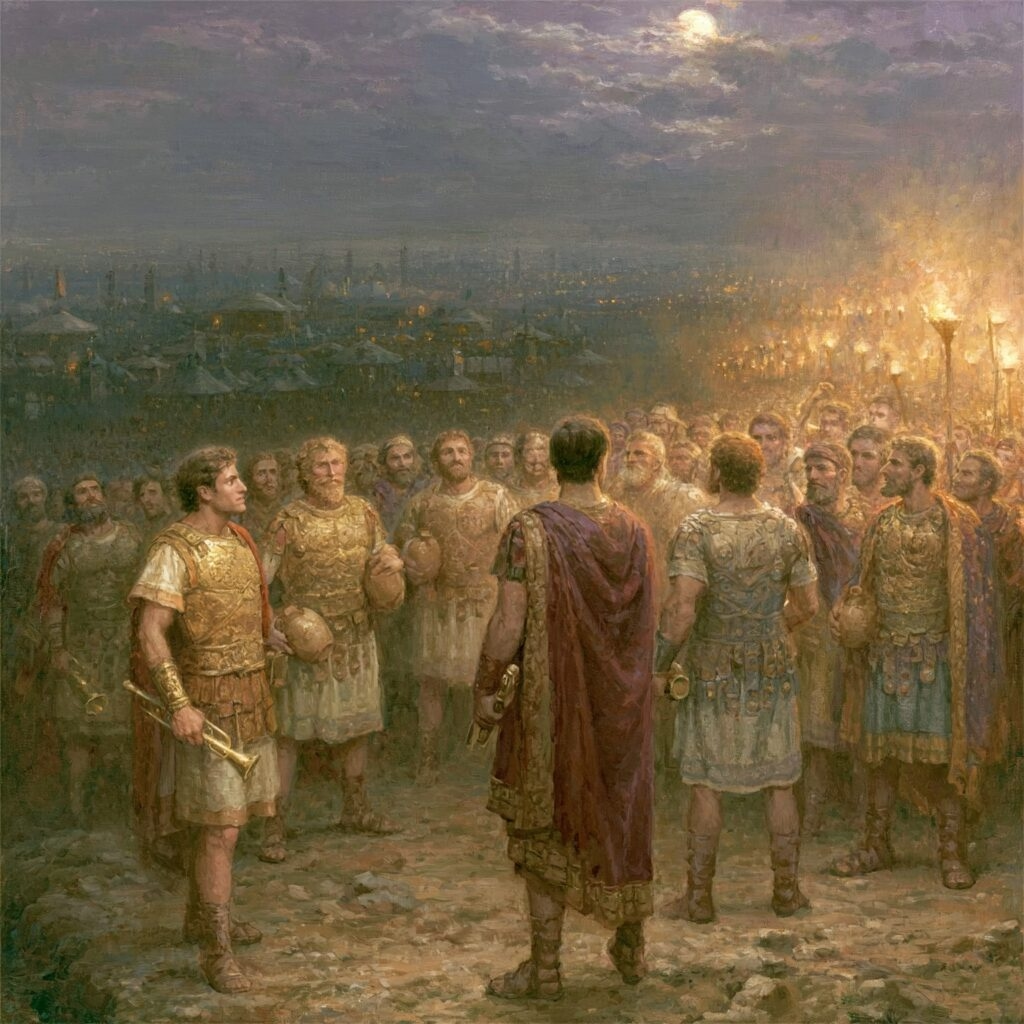
The story of Gideon uses trumpets, torches, and clay jars to picture human weakness, divine light, spiritual declaration, and surrendered vessels.
Gideon’s battle strategy appeared absurd from a military perspective:
- Trumpets,
- Clay jars,
- Hidden torches
It is not a plan likely to survive a modern strategy meeting. One can almost picture the collective stare of the consultants.
Yet the imagery carries remarkable spiritual symbolism.
Spiritual Symbolism in Gideon’s Strategy
Objects and Their Symbolic Meaning in the Story of Gideon
| Object | Symbolic Meaning |
|---|---|
| Clay jars | Human weakness |
| Hidden torches | Divine light within believers |
| Trumpets | Spiritual declaration and warfare |
| Broken vessels | Surrender and yieldedness |
Clay Jars
The jars concealed the light until they were broken.
This beautifully foreshadows the truth of the New Testament:
“But we have this treasure in earthen vessels, that the excellence of the power may be of God and not of us.” 2 Corinthians 4:7
Human weakness becomes the stage upon which divine glory shines.
God often permits the breaking of reliance on self so His light can emerge more clearly through surrendered lives.
Trumpets
Trumpets throughout Scripture symbolise:
- Divine announcement
- Spiritual warfare
- Heavenly intervention
- Prophetic declaration
The sound preceded the visible breakthrough.
There is tremendous spiritual power in declaring God’s promises before circumstances visibly change.
Torches
The sudden blaze of light shattered Midianite confidence and created chaos throughout the enemy camp.
Light emerging from broken vessels becomes a profound picture of surrender.
Sometimes God allows outer confidence to break so His glory can finally shine unhindered.
Why Did Gideon Worship Before the Battle?
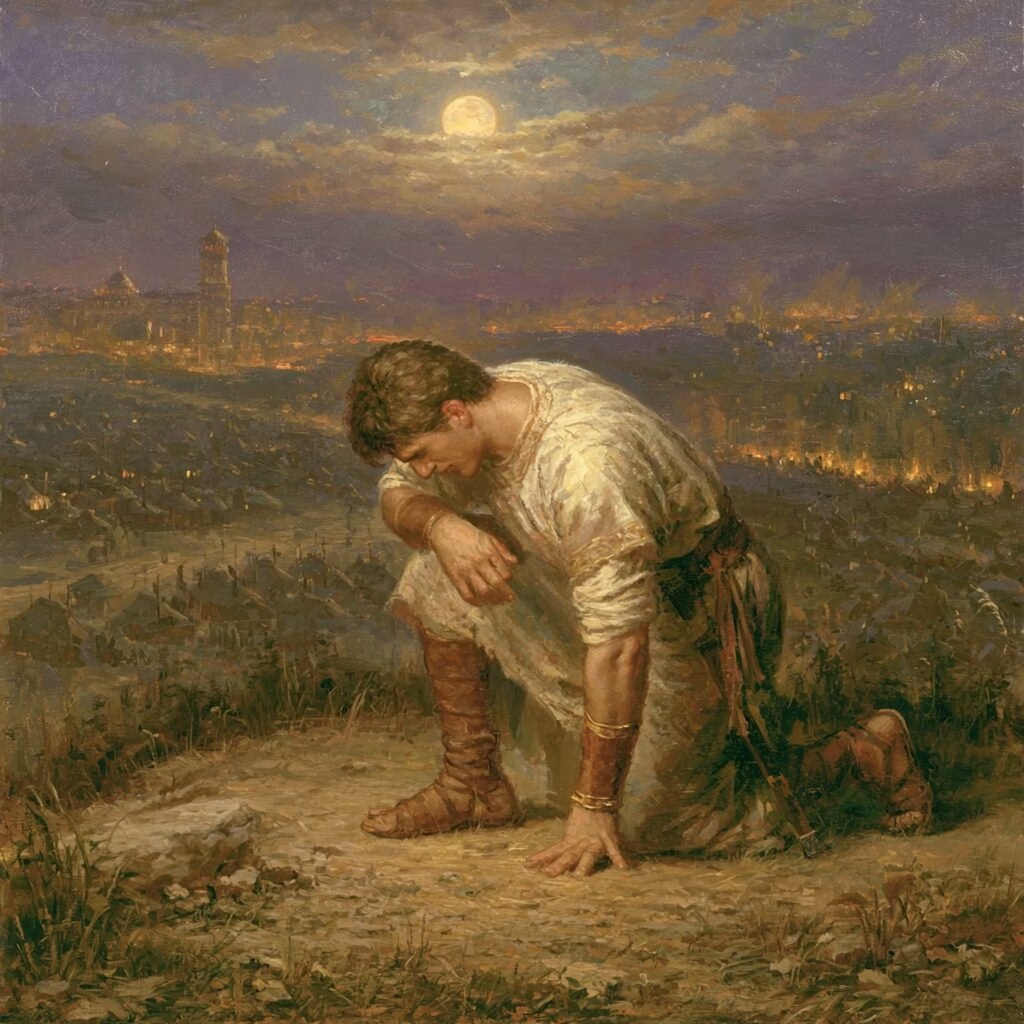
The story of Gideon shows that worship can come before visible victory.
One of the most touching moments occurs when Gideon overhears the Midianite dream.
“During that night the Lord said to Gideon, ‘Get up, go down against the camp, because I am going to give it into your hands. If you are afraid to attack, go down to the camp . . . and listen to what they are saying’ . . . Gideon arrived just as a man was telling a friend his dream. ‘I had a dream,’ he was saying. ‘A round loaf of barley bread came tumbling into the Midianite camp. It struck the tent with such force that the tent overturned and collapsed. ‘His friend responded, ‘This can be nothing other than the sword of Gideon son of Joash, the Israelite. God has given the Midianites and the whole camp into his hands’” Judges 7:13
Barley bread was considered poor man’s bread. The dream essentially portrays something weak and insignificant overthrowing something mighty.
Gideon’s response is deeply revealing:
“And so it was, when Gideon heard the telling of the dream and its interpretation, that he worshiped.” Judges 7:15
Gideon’s Spiritual Progression
The Stages of Spiritual Development Gideon Progressed Through
| Stage | Description |
|---|---|
| Fear | Hiding in the winepress |
| Obedience | Tearing down Baal’s altar |
| Confirmation | The fleece and the dream |
| Worship | Bowing before battle |
| Victory | Midian defeated |
Worship appears before the battle is won. That is mature faith.
True worship does not merely celebrate visible victory. It trusts God beforehand. In the story of Gideon, worship is not an after-dinner speech following success. It is the posture of faith before the first trumpet sounds.
How Did Gideon’s Victory Deliver Israel?
The story of Gideon shows that the victory ultimately belonged to God.
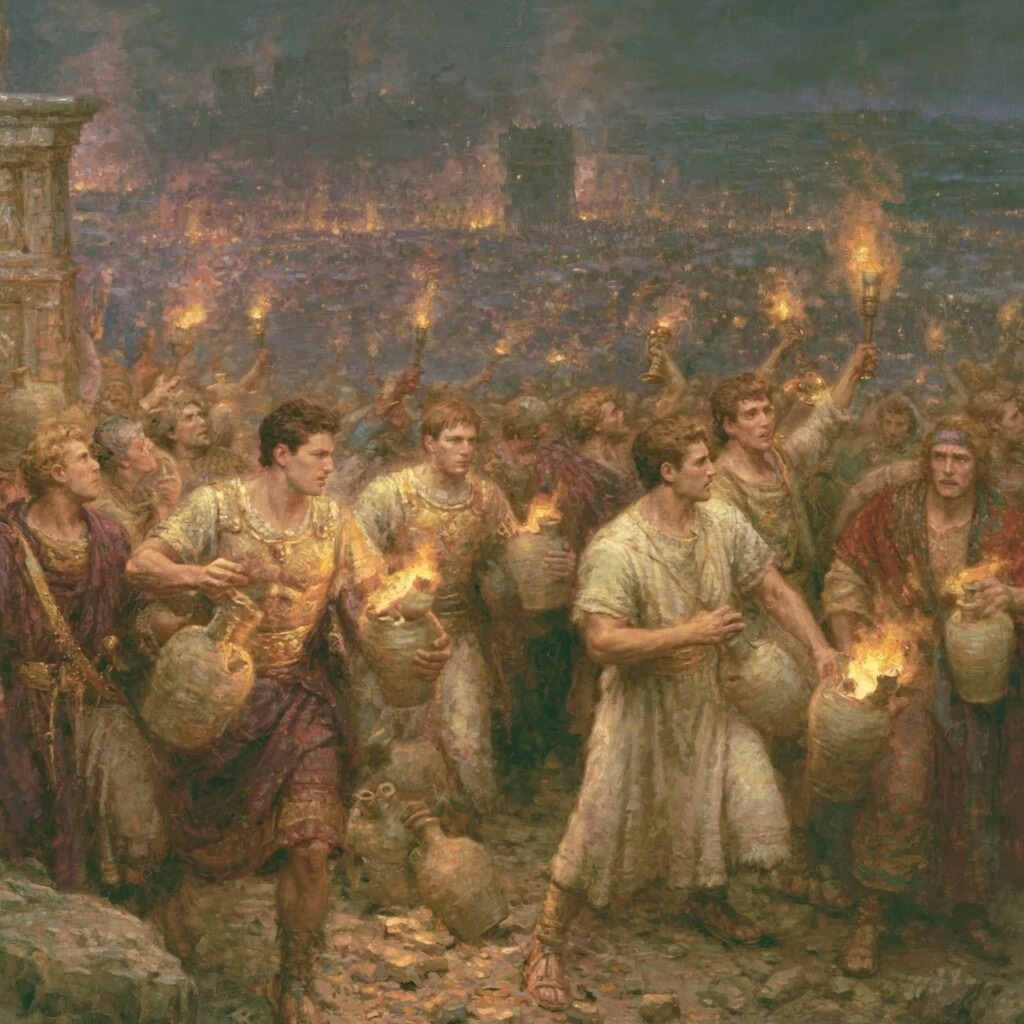
The Midianites collapse into confusion.
“When the three hundred blew the trumpets, the Lord set every man’s sword against his companion throughout the whole camp; and the army fled” Judges 7:22
This pattern appears repeatedly throughout Scripture:
- Jericho fell through obedience and praise.
- Jehoshaphat sent singers before armies.
- Elisha defeated Syria through confusion and blindness.
- Christ triumphed through apparent defeat at Calvary.
How God Often Wins Battles
Human Expectation Compared with the Way God Works
| Human Expectation | God’s Method |
|---|---|
| Superior strength | Dependence upon Him |
| Natural strategy | Supernatural intervention |
| Self-confidence | Faith and surrender |
| Impressive numbers | Yielded vessels |
God often works in ways human wisdom would never design. Faith therefore requires trust beyond natural reasoning.
What Was Gideon’s Tragic Weakness After Victory?
The story of Gideon warns that success can become spiritually dangerous when humility is neglected. The final part of the story of Gideon is spiritually sobering. The fearful farmer who once hid from Midian eventually begins acting as if he is a king who has crowned himself:
- Accumulating spoils
- Multiplying wives
- Naming his son Abimelech, meaning “my father is king,”
- Creating an ephod that later became a snare
This reveals a painful truth.
Great victories do not eliminate the need for humility.
Many believers handle adversity better than success. Pressure often drives people toward God. Success can quietly draw hearts toward self dependence. It enters softly, sits in the best chair, and begins offering opinions.
What was Gideon’s Contradiction?
When the men of Israel called on Gideon to rule as a king over them he made a declaration:
“ But Gideon said to them, “I will not rule over you, nor shall my son rule over you; the Lord shall rule over you.” Judges 8:23
Yet his behaviour did not follow. The words spoken by Gideon sounded humble, but his inner motivations were saying something different
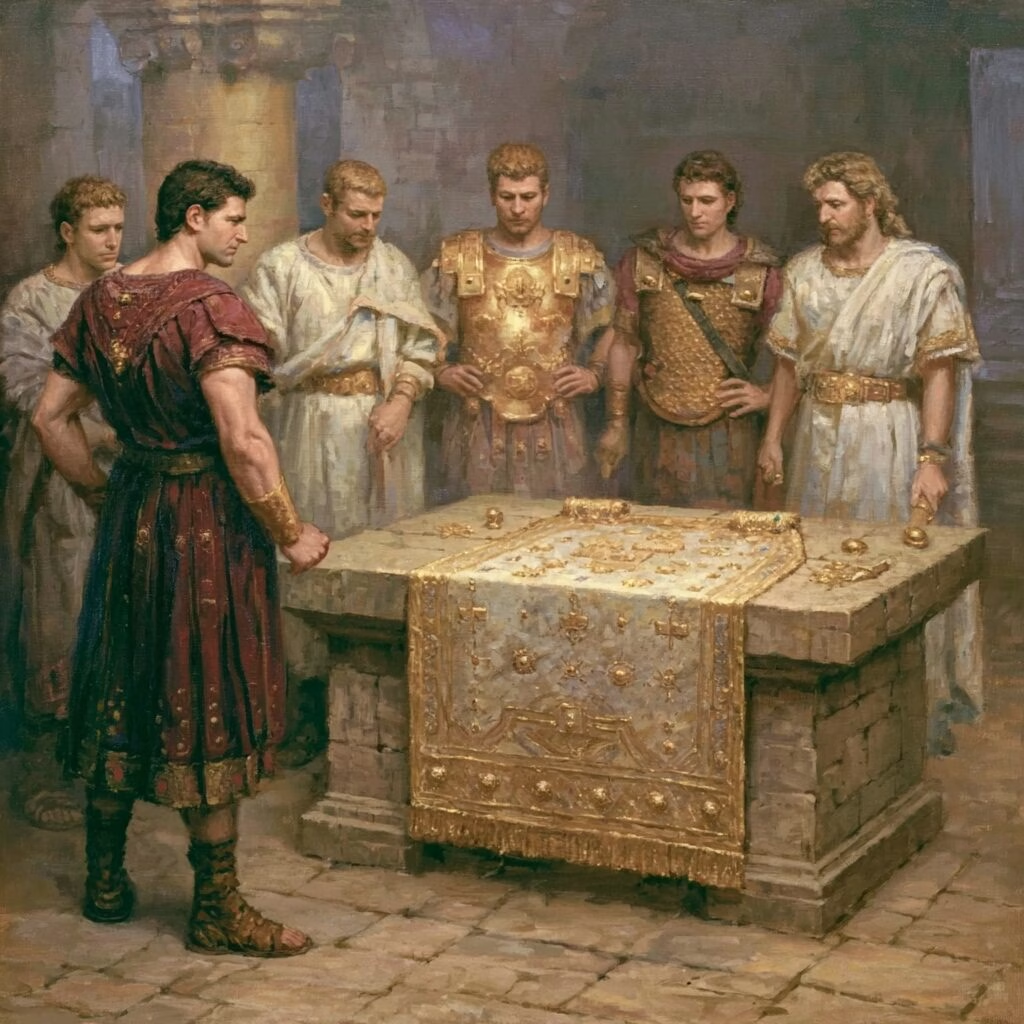
“Then Gideon said to them, “I would like to make a request of you, that each of you would give me the earrings from his plunder.” For they had golden earrings, because they were Ishmaelites . . . Then Gideon made it into an ephod and set it up in his city, Ophrah. And all Israel played the harlot with it there. It became a snare to Gideon and to his house.” Judges 8:24~27
The Words of Gideon Compared with His Actions
| Gideon’s Words | Gideon’s Actions |
|---|---|
| “The LORD shall rule over you” | Behaved increasingly like royalty |
| Refused a crown | Named son “my father is king” |
| Destroyed idols | Created an ephod snare |
The ephod eventually became an object of false worship:
The man who once destroyed idols nearly became the source of another. Scripture is wonderfully honest regarding human frailty.
Even sincere believers must continually guard their hearts.
This part of the story serves as a warning label, and unlike most warning labels, it should actually be read.
How Does the Story of Gideon Point to Christ?
The story of Gideon points beyond itself toward the greater Deliverer, Jesus Christ. Many Christians see beautiful foreshadowings of Christ throughout the account of Gideon.
How the Story of Gideon is a Shadow of the Story of Christ
| Gideon Narrative | Christological Echo |
|---|---|
| Weakness chosen by God | Christ born in humility |
| Deliverer raised by grace | Salvation initiated by God |
| Light from broken vessels | Glory revealed through suffering |
| Victory through impossibility | Resurrection triumph |
| Deliverance for oppressed people | Redemption from sin |
Of course, Gideon remained flawed, whereas Christ is perfect.
Yet Gideon’s story points beyond itself toward the greater Deliverer who would rescue humanity not merely from earthly oppression, but from sin, death, and spiritual bondage itself.
Here the story of Gideon finds its deepest meaning. Gideon delivered Israel from Midian for a season. Christ delivers His people eternally.
What Practical Lessons Can Believers Learn Today?
The story of Gideon gives believers practical lessons about calling, surrender, weakness, worship, and finishing well.
God Calls Imperfect People
Gideon’s fear did not disqualify him. Faith is not the absence of fear; it is obedience despite fear.
Private Idols Must Fall
Before public usefulness comes private surrender. Modern idols may include:
- Pride
- Comfort
- Approval
- Ambition
- Self-reliance
- Materialism
- Personal control
God’s Strength Appears in Weakness
The reduction to three hundred men teaches dependence upon divine power rather than human ability. Weakness surrendered to God becomes a platform for supernatural grace.
Worship Should Precede Victory
Gideon worshipped before the battle began. Faith praises God before circumstances visibly change.
Finishing Well Matters
Gideon’s later compromise warns believers to remain humble after success.
Spiritual victories never eliminate the need for vigilance.
After victory, the territory of the heart must be guarded just as carefully as before the battle has been won.
Frequently Asked Questions About the Story of Gideon
Was Gideon a man of faith?
Yes. lists Gideon among the heroes of faith despite his weaknesses. His faith was real, even though it grew through fear, questions, reassurance, obedience, and worship.
“And what more shall I say? I do not have time to tell about Gideon, Barak, Samson and Jephthah, about David and Samuel and the prophets, 33 who through faith conquered kingdoms, administered justice, and gained what was promised” Hebrews 11:32 ~33
Why did God choose only three hundred men?
God chose only three hundred men to show that the victory came from divine power rather than military strength. The reduced army prevented Israel from claiming glory for itself.
What does Gideon’s fleece symbolise?
Gideon’s fleece symbolises his need for reassurance and God’s patience with growing faith. It is not presented as the highest model of mature Christian development.
Why did Gideon’s ephod become dangerous?
Gideon’s ephod became dangerous because it became an object of misplaced devotion and spiritual compromise. What followed victory eventually became a snare.
Summary and Spiritual Reflection
The story of Gideon is ultimately not about human bravery. It is about divine mercy.
God finds a frightened man hiding in obscurity and transforms him into a deliverer. Yet the narrative also reminds us that spiritual battles continue long after visible victories are won.
Final Spiritual Lessons from Gideon
Lessons from the Story of Gideon and Their Meaning
| Lesson | Meaning |
|---|---|
| God sees destiny in weakness | God calls beyond present limitation |
| Worship is spiritual warfare | Faith praises before victory appears |
| Idols must fall first | Private surrender precedes public victory |
| Weakness can become strength | God’s power works through yielded lives |
| Success requires humility | Victories must not produce pride |
The central message is beautifully simple:
God does not require extraordinary people. He requires surrendered people.
Or, to put it another way, heaven has never been terribly impressed by statistics. Three hundred yielded men proved entirely sufficient.
And perhaps that remains one of the most comforting truths in all of Scripture.
The story of Gideon still speaks because God still delights in using ordinary people filled with extraordinary dependence upon Him.